
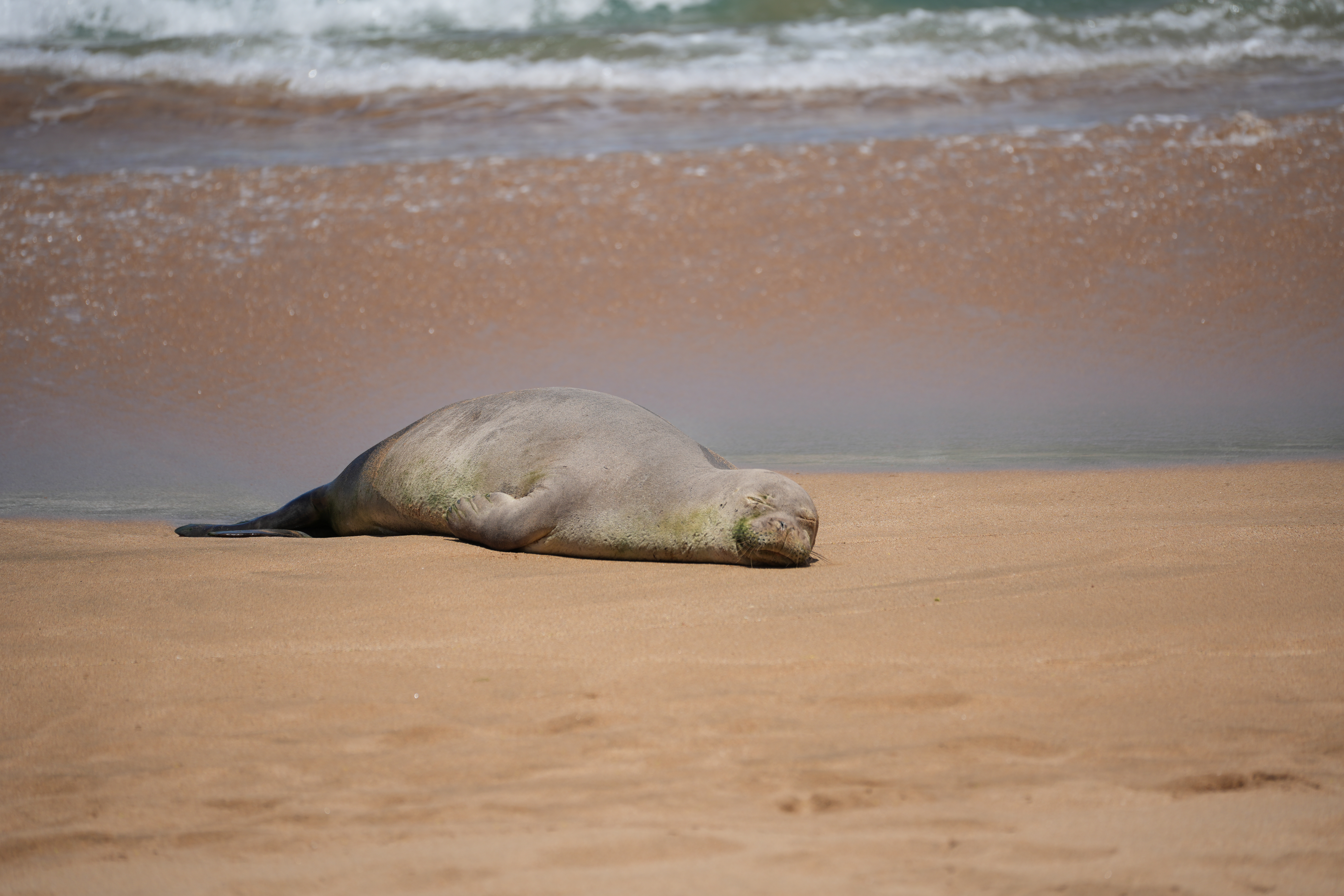
Inside the Marine Institute's Work to Protect Maui's Honu, Monk Seals, and Coral Reefs
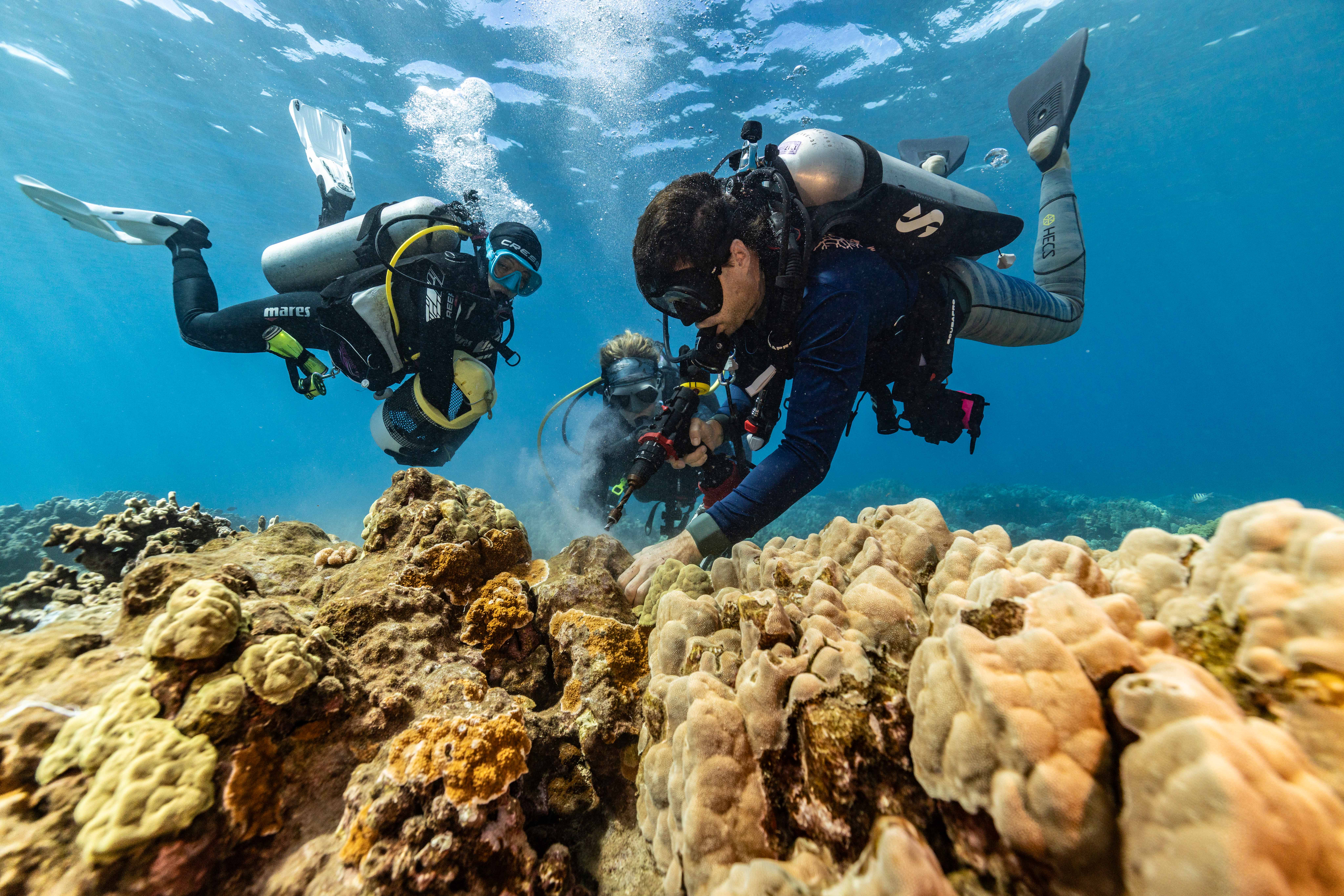
The Marine Institute: Outplanted coral plugs established on the reef (PC Nāhoa Kai Productions)
There's a moment almost every visitor to Maui experiences: a Hawaiian Green Sea Turtle (honu) gliding past during a snorkel at Honolua Bay, a monk seal sunbathing at Poʻolenalena, a flash of color on a reef wall at Molokini. These encounters feel like magic, but behind every one of them is a fragile, interconnected ecosystem — and a small team working around the clock to keep it that way.
I became aware of their work through a friend who volunteers with a team to disentangle sea turtles. He is an experienced diver and professional underwater cinematographer. He finds this is a way he can give back to Maui, and the place he loves most, the waters that surround our island, and its marine life.
That team is the Marine Institute, based at the Maui Ocean Center in Māʻalaea. While their mission is simple to state, it is enormous in practice: to protect Maui's marine ecosystems by uniting science, community engagement, and education to restore ocean health and inspire lifelong stewardship.
In this installment of Live Aloha, Give Aloha, we're taking a closer look at how they do it, and how you can be part of the work.
A Whole-Ecosystem Approach
What sets the Marine Institute apart is that they don't treat Maui's marine species as separate problems to solve. Monk seals, honu, and coral reefs are all links in the same chain — each one relies on the health of the part next to it. A reef that isn't thriving can't support the marine life that turtles feed on. A shoreline under pressure affects both the seals that rest on it and the turtles that nest near it. So rather than running isolated rescue efforts, the Marine Institute operates four programs that work in concert: a Hawaiian monk seal response program, a honu response, rescue and rehabilitation program, a coral restoration program, and a conservation education program that reaches classrooms and communities across the island.
Below is a closer look at each.
Hawaiian Monk Seal Response
Hawaiian monk seals are among the most endangered marine mammals on Earth, and Maui's shoreline is an increasingly important part of their story. The Marine Institute's trained responders and volunteers monitor haul-outs, pupping, and molting events along the coast, collecting health data while helping beachgoers understand how to safely share the shoreline with a resting seal. Given the sensitivity of the species and the specialized training required to work near it, this work is conducted under a cooperative agreement with NOAA.
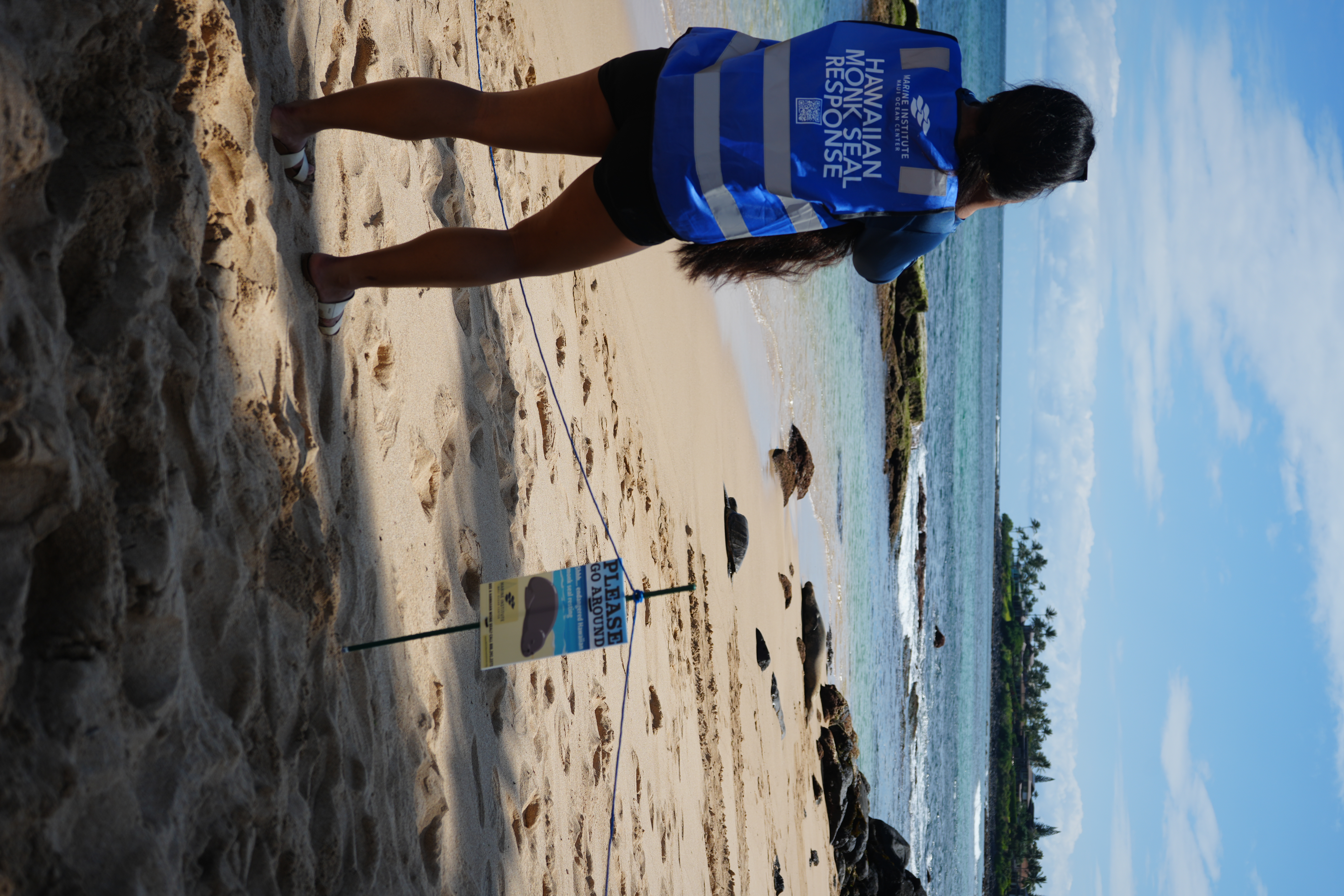
A Hawaiian monk seal response volunteer keeping watch over a hauled-out monk seal
You must stay at least 50 feet away from a monk seal on land or in water, and it’s recommended to stay even further away (150 feet) from a mother and pup. Keep dogs on a leash. Wide space protects humans, our pets, and these rare animals.
If you spot a monk seal on Maui, The Marine Institute's monk seal hotline is 808-292-2372 — a good number to save before your next beach day.
Honu Response, Rescue & Rehabilitation
The Marine Institute is home to the Honu Hospital, Hawaiʻi's first dedicated sea turtle rehabilitation facility, and manages Maui's sea turtle stranding response network and offers rehabilitative care for honu from the entire island chain. Since 2016, the program has helped more than 1,800 honu, providing everything from wound care and laser therapy to surgical intervention for turtles affected by fishing line entanglement.
That arc — from entanglement, to treatment, to release — is the heart of the program, and it's beautifully captured in this short video from The Marine Institute: Watch the Honu Program video. If you want to understand what a day at the Honu Hospital looks like, it's worth the few minutes.
To report an injured or distressed sea turtle, call The Marine Institute's sea turtle hotline at 808-286-2549. All sea turtle stranding response, rehabilitation, and research is authorized under USFWS and NOAA permits and conducted under DLNR DAR Special Activities Permits.
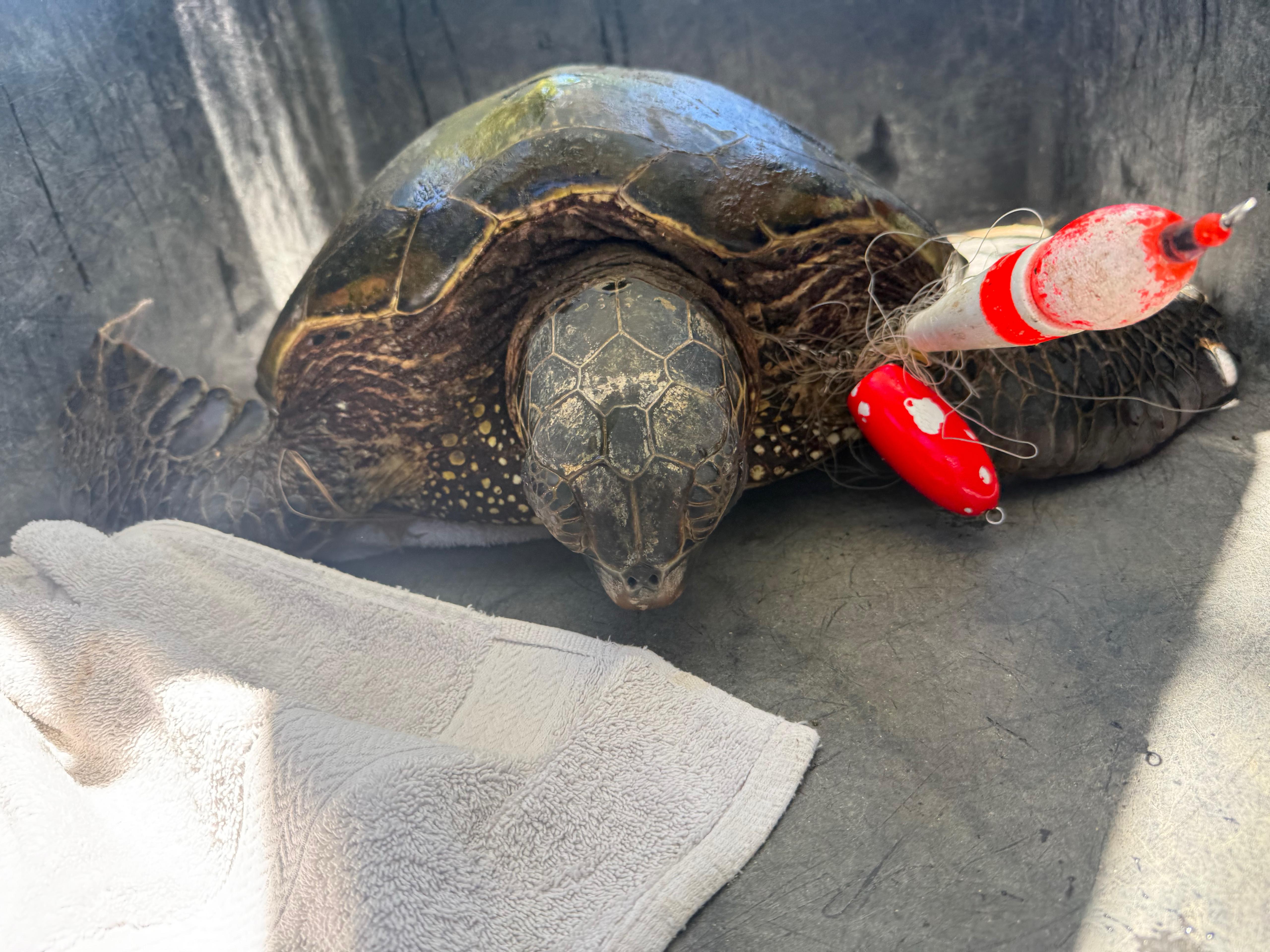
An entangled sea turtle, the kind of case that often brings a honu into The Marine Institute's care
Coral Restoration
Coral reefs are the foundation everything else in this story depends on, and The Marine Institute operates the only restoration focused land-based coral nursery on Maui. The process starts with naturally dislodged coral fragments, which are tested for resilience to warming ocean temperatures. The hardiest specimens are propagated and grown out on plugs before eventually being outplanted back onto the reef, strengthening it against future stress. The less thermally tolerant corals are returned to their home reef, intact, and planted in deeper, cooler water. To date, the program has outplanted more than 1,800 corals across nine native species.
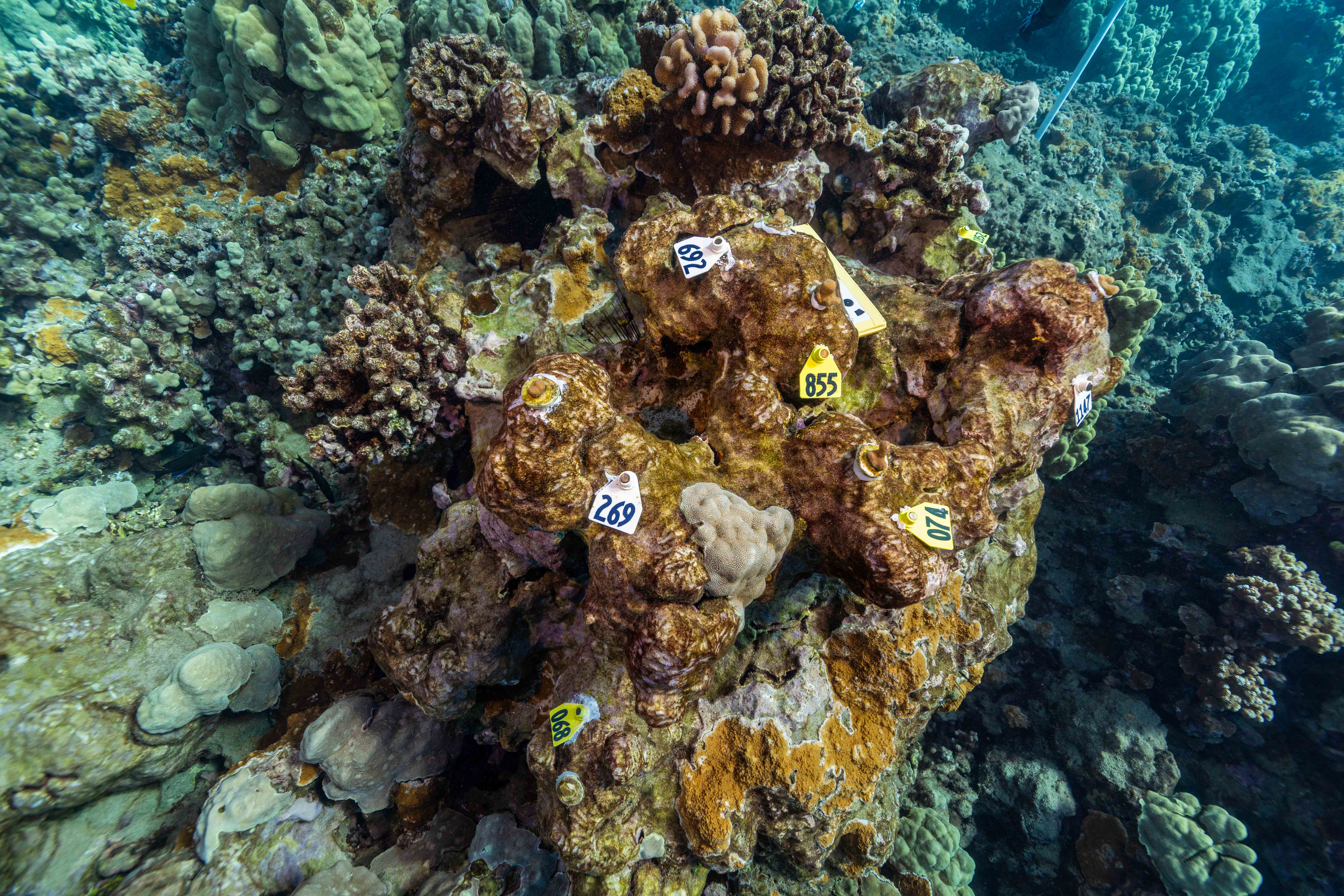
Outplanted coral onto the reef (PC Nāhoa Kai Productions)
Conservation Education
None of this work is sustainable without the next generation understanding why it matters. Through partnerships with local schools and boreal summer educational programming, The Marine Institute's conservation education program has reached thousands of students, community members, and visitors— building the kind of lifelong stewardship their mission statement points to.
The Impact, By the Numbers
Since The Marine Institute began this work, their team and volunteers have made a measurable difference for Maui's marine ecosystem:
- 1,800+ sea turtles rescued and treated at the Honu Hospital since 2016
- 800+ Hawaiian monk seal emergency responses
- 1,800+ corals outplanted across nine native species
- 200+ active volunteers
- 5,000+ students, community members, and visitors educated last year
Live Aloha: Volunteer
The Marine Institute's volunteer program is built around a 6-month minimum commitment. That may sound like a big ask, but it's a direct reflection of the species and permits involved — working with endangered monk seals and honu requires extensive, specialized training
Every volunteer starts with a general onboarding session, then moves into training specific to the program area they're drawn to. Depending on your interests, that could mean:
- Joining the in-field response team, answering calls for honu or monk seal emergencies
- Serving on the hotline dispatch team, fielding those first calls from the community
- Getting hands-on in husbandry, supporting daily care for honu and coral, from water testing and tank cleaning to feeding and therapy sessions like the massage pictured above
You can learn more and apply through Join Our Ohana.
Visiting Maui or can't commit to six months?
There are still meaningful ways to get involved:
- Sign up for the Honu Hero program, a self-guided beach cleanup that removes the debris responsible for many of the entanglements the Honu Hospital treats
- Stop by a Marine Institute community event, including Hana Pūkoʻa coral days, where small groups get hands-on identifying, fragmenting, and prepping coral for outplanting (sign-ups are shared through The Marine Institute's newsletter and social media). Follow on instagram
- Add the behind-the-scenes tour to your Maui Ocean Center visit — The Marine Institute is a stop on that tour, and a portion of every ticket goes directly to conservation programs
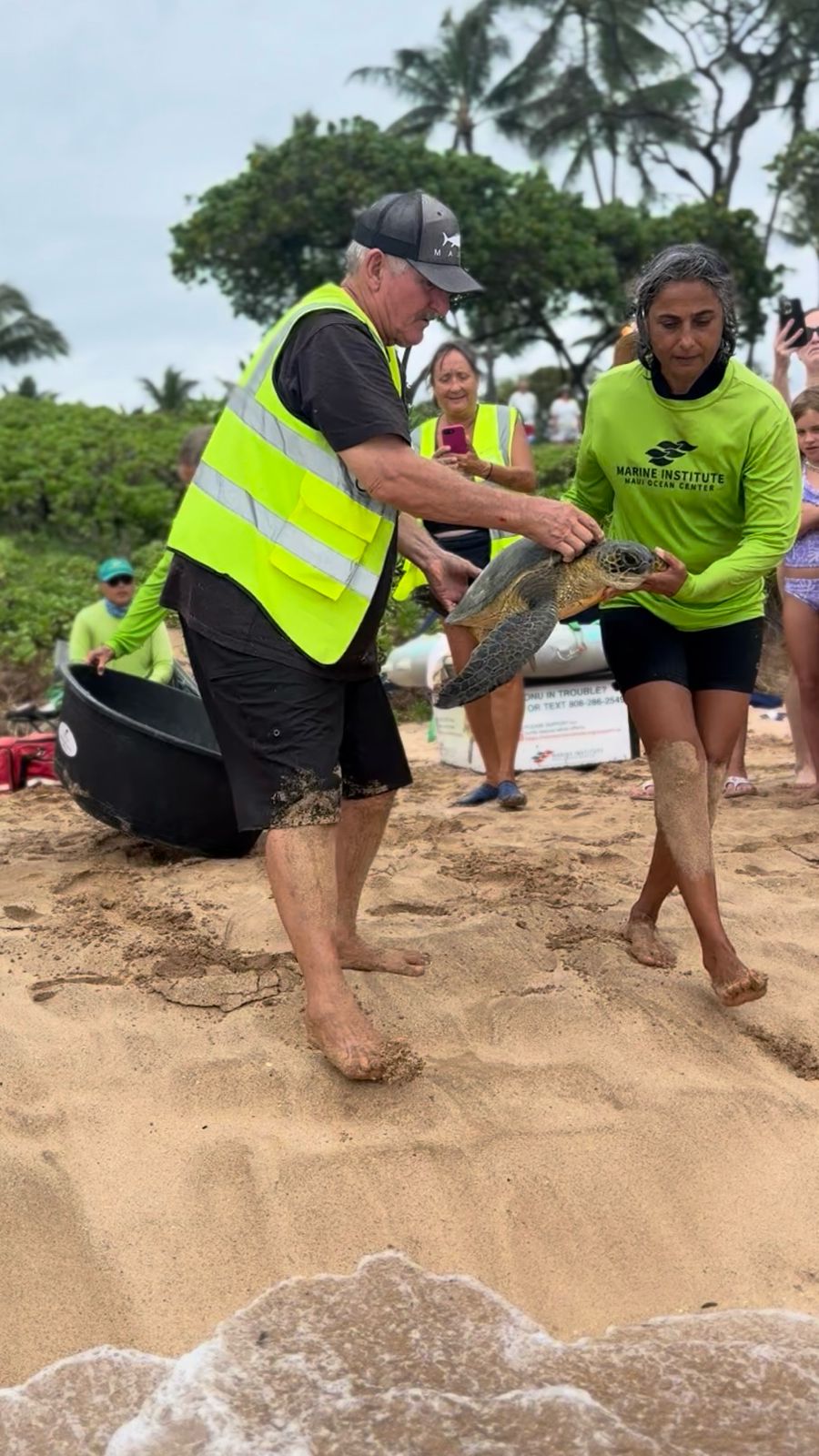
A sea turtle being released back to the ocean after recovery by trained volunteers
Give Aloha: Donate
If your schedule doesn't allow for volunteering, your support still goes a long way. The Marine Institute accepts donations through their online giving platform as well as mail-in checks, and if your employer participates in Benevity, your donation may be eligible for a company match.
A few other ways to give:
- Symbolic adoptions. Adopt a honuor a coral to support The Marine Institute's work while bringing home a meaningful keepsake. This is a fan favorite and a wonderful gift as well for birthdays and holidays.You can also support a field response to honu or Monk seals or event sponsor the entire rehab of a critically injured honu.
- Stays for the Sea. A hotel partnership program that supports The Marine Institute's conservation work while giving resort guests an enhanced, educational experience during their stay.
- Corporate Stewardship. Businesses can partner through direct sponsorship or in-kind donation, in exchange for benefits ranging from brand visibility and media assets to Executive Director strategy briefings, private tours, and impact summaries for annual reports. As a registered 501(c)(3) (EIN 81-2540684), many of these contributions may be tax-advantaged. Learn more about Corporate Stewardship
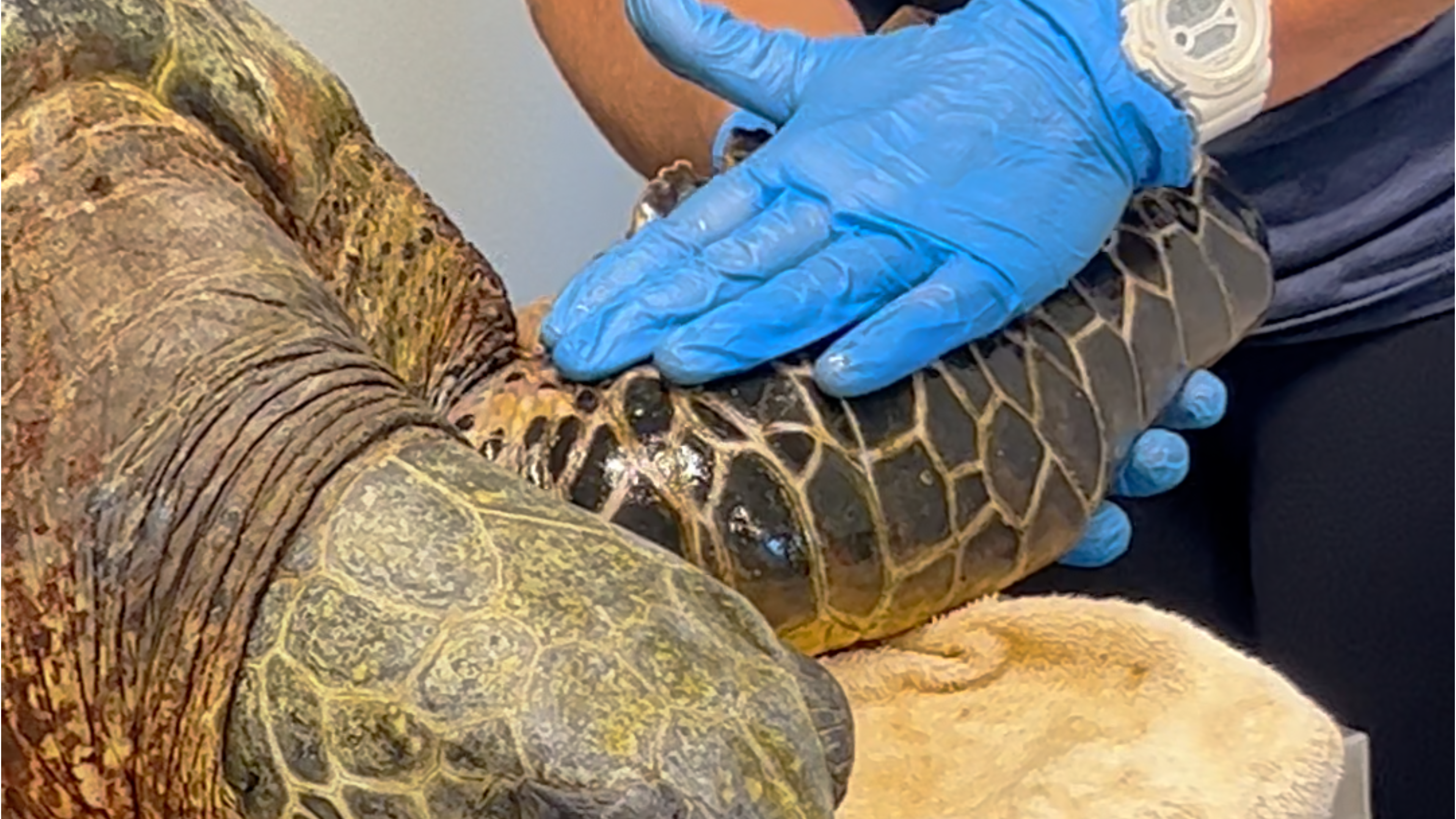 A rehabilitating honu receiving massage therapy
Every one of these paths — six months in the field or a single donation — feeds the same mission: a healthier ocean for the honu, the monk seals, and the reef that supports them both.
To learn more about The Marine Institute's programs, visit mocmarineinstitute.org.
All of The Marine Institute's sea turtle stranding response, rehabilitation, and research is authorized under USFWS and NOAA permits and conducted under DLNR DAR Special Activities Permits, while all work related to Hawaiian Monk Seals is conducted under a cooperative agreement with NOAA. Coral restoration work is authorized under DLNR DAR Special Activities Permits.
Posted by Courtney M. Brown onEnjoy this blog post? Click here to subscribe for updates
Leave A Comment